


Table of Contents
- What Makes a Soft Cotton Graphic Tee Worth Buying
- Best Quality Graphic Tee Brands for Women: What to Look For
- Cotton vs Polyester Graphic Tees: Which Feels Better and Lasts Longer
- How to Wash Graphic Tees to Keep Them Soft (Without Cracking the Print)
- Vintage-Inspired Graphics and Retro Aesthetics That Last
- Ethical Manufacturing and Made-in-USA Transparency
- Styling Your Soft Cotton Graphic Tee for Everyday Wear
- Conclusion
- Frequently Asked Questions
Last Updated: September 23, 2026
What Makes a Soft Cotton Graphic Tee Worth Buying
The best soft cotton graphic tees for women start with one thing most shoppers never check: fiber content. A shirt that feels plush on the rack can turn stiff and pilly after a month if the cotton is thin or blended with synthetic filler. At Sunfire Tees, we build every shirt around soft, breathable cotton.
Fabric Weight and Fiber Content: The Real Softness Test
Fabric weight measures how heavy a knit is, usually in grams per square meter (GSM). Lightweight tees around 140-150 GSM feel airy but read as thin. Midweight knits at 160-180 GSM hit the sweet spot: substantial enough to drape well, light enough to stay breathable.
A quick checklist before you buy:
- Fiber content lists cotton first, not polyester
- Fabric weight is 160 GSM or higher for opacity
- Label mentions pre-shrunk or garment-dyed
- Reviews mention the tee is not see-through
Best Quality Graphic Tee Brands for Women: What to Look For
The best quality graphic tee brands for women share a few quiet habits: they publish fabric weights, show tees on real body types, and stand behind their sizing. When a brand hides its specs, that usually signals the specs are not flattering.
Sizing Consistency Across Cuts: Oversized vs. Baby Tee
An oversized fit and a baby tee use different patterns, so the same size label will not fit the same way. An oversized tee has extra room and a dropped shoulder; a baby tee is cut close with a shorter length and snugger armhole.
| Cut | Body Fit | Best For | Sizing Tip |
|---|---|---|---|
| Oversized fit | Loose, dropped shoulder | Relaxed, layered looks | Size down for a cleaner line |
| Baby tee | Snug, cropped | Fitted, high-waisted outfits | Size up if between sizes |
| Classic crew | Straight, true to size | Everyday wear | Order your usual size |
Cotton vs Polyester Graphic Tees: Which Feels Better and Lasts Longer
Cotton wins on feel and breathability; polyester wins on wrinkle resistance and colorfastness. But most guides compare day-one feel and stop there. The real question is what the shirt looks like after 30 washes, and that answer lives in fiber length, yarn structure, and print application.
Why Cotton Feels Softer: Staple Length and Yarn Structure
Cotton softness is a function of staple length, how long the individual fibers are. Long-staple cottons like pima and Supima spin into smoother, stronger yarn with fewer fiber ends poking out, meaning less friction against skin and less material to knot into pills.
The Wash-Test Reality: What 30 Cycles Actually Do
Most guides test softness once, on a new shirt. A more useful test is what happens across repeated washing:
- Long-staple, ring-spun cotton (160-180 GSM): softens slightly through the first 5-10 washes, then stabilizes. Minimal pilling if washed cold and dried low.
- Short-staple, open-end cotton: feels fine initially but develops visible pilling around wash 8-15, especially in high-friction zones.
- 50/50 cotton-poly blends: resist pilling and fading well but tend to develop a slight sheen and lose the plush hand-feel over time.
- 100% polyester: holds color and shape longest, but traps heat and can feel slick rather than soft against skin.
Print Method Changes the Lifespan Too
Fiber is only half the story. How the print is applied affects both feel and durability:
- Plastisol screen printing: durable and colorfast, but adds a rubbery layer that can crack if dried hot or stretched repeatedly.
- Water-based screen printing: soaks into the fabric, feels softer to the touch, and ages with a faded vintage look rather than cracking.
- DTG (direct-to-garment): good for detailed or one-off designs, but the ink sits on the surface and can fade faster with repeated washing.
How to Wash Graphic Tees to Keep Them Soft (Without Cracking the Print)
Wash graphic tees inside out in cold water on a gentle cycle, then dry on low heat or hang to air-dry. That routine protects both the cotton and the print, the difference between a tee that lasts a season and one that lasts years.
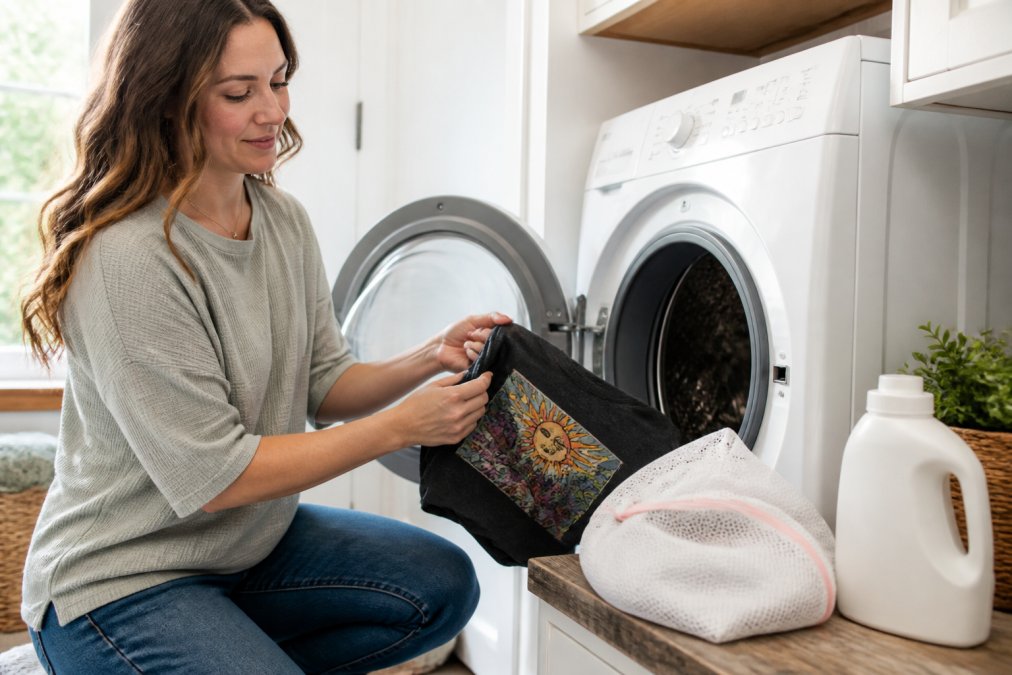
A few habits that pay off:
- Turn the tee inside out before it hits the machine
- Skip fabric softener, which coats fibers and dulls the print
- Wash with similar colors to avoid dye transfer
- Hang or lay flat to dry whenever you can
- Never iron directly over the graphic
The First-Wash Rule That Saves Your Favorite Tee
Wash a new graphic tee alone, inside out, in cold water before wearing it. This first wash sets the fabric, removes residual manufacturing finish, and reveals any shrinkage problem while the tee is still returnable.
Vintage-Inspired Graphics and Retro Aesthetics That Last
Vintage-inspired design is having a long moment, but the tees that survive the trend cycle share a quality the flashy ones lack: restraint. A retro graphics look built on simple shapes, muted palettes, and clean type ages far better than one packed with the year's buzzwords.
Ethical Manufacturing and Made-in-USA Transparency
Transparency is the hardest claim to verify and the one worth the most. Most guides stop at "look for organic cotton" and "buy from brands that care", not a standard you can check. The gap competitors miss is the verification layer: what a shopper can look up, ask, and cross-reference before trusting a sustainability or domestic-manufacturing claim.
What "Made in USA" Actually Requires
The Federal Trade Commission (FTC) sets the standard for unqualified "Made in USA" claims: all or virtually all significant parts and processing must be of U.S. origin (the FTC). An unqualified claim is a legal claim, not a marketing flourish. Qualified claims like "Made in USA with imported materials" or "Assembled in USA" are allowed but must state what portion is domestic.
Certifications You Can Actually Verify
Vague green language is not a certification. These are:
- GOTS (Global Organic Textile Standard): covers organic fiber content plus environmental and social criteria across processing. A GOTS-certified tee has a traceable chain of custody.
- OEKO-TEX Standard 100: tests finished textiles for harmful substances (OEKO-TEX® STANDARD 100). It does not certify organic content or labor conditions.
- Fair Trade Certified: focuses on worker conditions and premiums at the sewing level. Look for the seal on the garment, not just the website.
- bluesign: focuses on chemical and environmental impact in textile production.
A brand can hold one, several, or none. The useful move: check the certification number against the certifying body's public database rather than trusting a logo image.
The Supply-Chain Questions Worth Asking
If a brand publishes a supplier list, that is a strong signal. If it does not, these questions separate substance from slogans:
- Where is the cotton grown, and where is it spun? Grown, spun, and sewn are three different locations, and most brands only disclose the last one.
- Which facility does the cut-and-sew? A named factory can be cross-referenced against public audit records.
- What inks and dyes are used? Water-based and eco-friendly inks are real improvements over plastisol in terms of chemical load, though plastisol is not inherently unsafe when properly cured.
- Is there a published audit or code of conduct? A PDF with named auditors and dates is verifiable; a paragraph of values language is not.
Where the Honest Trade-Offs Live
Domestic manufacturing typically costs more per unit than overseas production, which is why made-in-USA tees often cost more. Organic cotton yields can be lower and more variable, affecting supply and cost. Water-based printing can be less durable than plastisol in high-wear areas. None of these trade-offs make the ethical choice wrong, but a brand that acknowledges them is more credible than one claiming every box is checked at no cost.
Styling Your Soft Cotton Graphic Tee for Everyday Wear
A soft cotton graphic tee is the most flexible piece in a casual wardrobe. Tuck a baby tee into high-waisted jeans for a fitted, casual chic look, or wear an oversized fit loose over leggings for errands.
Conclusion
Finding a graphic tee that stays soft, fits right, and keeps its print past the tenth wash is harder than it should be, exactly the problem worth solving. Sunfire Tees builds soft, colorful tees on quality cotton, made in Texas, with humor and sunshine baked into every design. Fast shipping gets your order to your door, and our soft cotton material and feel-good designs mean you never settle for a boring shirt.
Frequently Asked Questions
What are some good soft cotton graphic tees for women?
Look for tees made from 100% combed ringspun cotton or pima cotton with a fabric weight between 4.5 and 6 oz. These feel smooth against the skin and hold their shape. Slub jersey and garment-dyed options add texture without sacrificing softness. Check for pre-shrunk labels and reinforced stitching at the neck and shoulders, which signal durable construction that survives repeated washing.
How can you tell if a graphic tee is high quality before buying?
Check three things: fiber content, fabric weight, and print method. High-quality cotton tees list specific cotton types like pima or combed ringspun on the label. A fabric weight of at least 4.5 oz means the shirt won't be see-through. Screen printing outlasts heat-transfer prints. Also look for double-stitched hems and a soft-hand feel, which indicate the tee was wash-tested and built to last.
Are 100% cotton tees better than cotton blends for softness?
100% cotton typically wins on breathability and softness, especially pima cotton and combed ringspun varieties. Cotton-polyester blends resist shrinking and wrinkles better, but they can feel less soft over time and may pill more easily. For everyday wear, a high-quality 100% cotton tee with a soft-hand feel offers the best combination of comfort and durability, particularly if it is pre-shrunk and garment-dyed.
How do I keep my graphic tee soft after washing?
Turn the tee inside out and wash it in cold water on a gentle cycle. Skip the dryer or use low heat, because high heat breaks down cotton fibers and cracks screen-printed graphics. Use a mild detergent without bleach or fabric softener, which can leave residue that stiffens fabric. Hang dry or lay flat when possible. Following these steps keeps the cotton soft and the print intact for years of regular wear.
Ready to stop settling for stiff, faded tees? Shop All at Sunfire Tees and find a soft cotton graphic tee that makes you and everyone around you smile.