


Table of Contents
- Quick Checks: How to Tell if Cotton Is High Quality in 60 Seconds
- Long-Staple Cotton vs Short-Staple: Why Fiber Length Decides Everything
- The Cotton Fabric Durability Test You Can Run at Home
- Decoding Labels: Pima vs Egyptian vs Upland
- Weave, Thread Count, and Fabric Weight: Reading the Specs
- Why Domestic Manufacturing Matters for Apparel Quality
- Pilling, Shrinkage, and Colorfastness: What Happens After 20 Washes
- Frequently Asked Questions
Last Updated: September 27, 2026
Quick Checks: How to Tell if Cotton Is High Quality in 60 Seconds
Learning how to tell if cotton is high quality comes down to a few quick checks you can do in under a minute. At Sunfire Tees, we handle soft cotton shirts every day. This guide shows you exactly what to look for.
High-quality cotton is soft, dense, and holds its shape. Lower-grade cotton feels thin, pills quickly, and loses color after a few washes. You can spot the difference fast with your eyes and hands.
Here is the good news: you do not need a lab or a special tool. You just need to know where to look.
The 7-Point Quality Checklist
Run through these checks the next time you pick up a cotton shirt:
- Hold it up to light. Can you see through it?
- Rub the fabric. Does it feel soft or scratchy?
- Check the label for fiber type and origin.
- Look at the weave. Is it tight and even?
- Stretch it gently. Does it bounce back?
- Feel the weight. Does it seem substantial?
- Check the seams and stitching for clean finishing.
Long-Staple Cotton vs Short-Staple: Why Fiber Length Decides Everything
Fiber length is the single biggest factor in cotton quality. Long-staple cotton has longer fibers that spin into smoother, stronger yarn. Short-staple cotton has shorter fibers, which create a rougher surface and weaker fabric.

The difference shows up fast. Long fibers mean fewer exposed ends, so the fabric feels softer and resists pilling. Short fibers poke out of the yarn, which causes that scratchy feel and those little balls you see after washing.
This is why staple length matters more than almost anything else on a label. Longer fibers also mean stronger yarn, so the shirt keeps its shape instead of stretching out.
If you want to learn how to tell if cotton is high quality, start here. Fiber length sets the ceiling for everything else, from softness to durability.
The Cotton Fabric Durability Test You Can Run at Home
You can test cotton fabric durability at home with three simple moves. These checks show how the fabric holds up before you ever wash it.
First, stretch the fabric gently and let go. Good cotton snaps back into shape. Fabric that stays stretched or feels loose is a warning sign.
Second, rub the surface with your thumb. If little fibers roll up right away, it will likely pill fast.
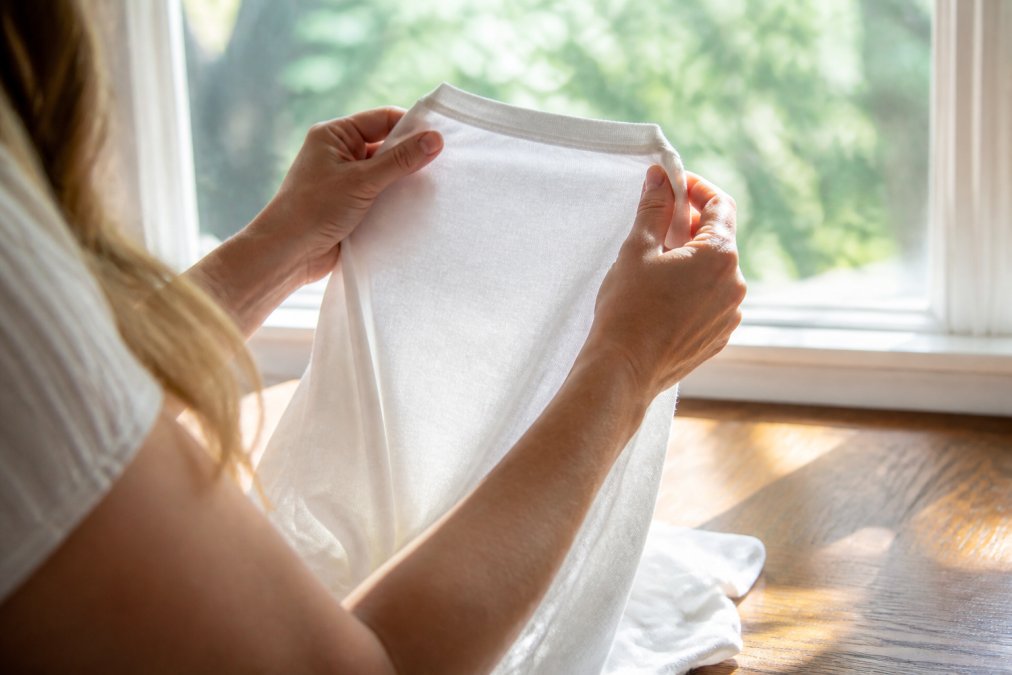
Third, hold it to a window. A tight, even weave blocks more light. A thin, loose weave lets it pour through.
The Burn Test for Fiber Identification
The burn test is a simple way to check fiber content, but only do it on a loose thread or a small sample, never on a shirt you plan to wear. Safety comes first.
Here is how it works:
- Pull a single thread from a seam or hem.
- Hold it with tweezers over a fire-safe surface.
- Light it and watch how it burns.
- Notice the smell and the ash.
Pure cotton burns like paper and smells like burning paper. The ash is soft and gray. If the thread melts or smells like plastic, it contains synthetic fibers. This test tells you what is really in the fabric, not just what the label claims.
Decoding Labels: Pima vs Egyptian vs Upland
Cotton labels use names that sound similar but mean very different things. The names refer to two things at once: the botanical species of the plant, and the staple length of the fiber it produces. Knowing both is how you separate a real quality upgrade from a marketing word.
Almost all cotton sold worldwide belongs to one of two cultivated species:
- Gossypium hirsutum (upland cotton) accounts for the large majority of global production. Its fibers are short to medium staple, generally under about 1.1 inches, and it is the cotton in most basic tees, sheets, and denim.
- Gossypium barbadense (extra-long-staple cotton) produces fibers roughly 1.3 to 1.6 inches long. Pima and Egyptian cotton are both varieties of this species. The longer fiber is what creates the smoother, stronger, less-pilling yarn.
That single botanical fact explains the price gap. A barbadense shirt costs more because the plant yields less fiber per acre and the fiber must be handled more carefully through ginning and spinning to avoid breaking the long staples.
Pima cotton is a barbadense variety developed and grown primarily in the American Southwest, with Arizona, California, New Mexico, and Texas as the main growing regions. The name traces to the Pima people, who cultivated an early version of the plant. Pima is a recognized extra-long-staple category, and American-grown Pima is often sold under the Supima trademark, which requires the fiber to be 100% American-grown Pima and is verified through the supply chain.

Egyptian cotton is also barbadense, grown in the Nile Delta. The reputation is earned, but the label is the loosest of the three. Egypt exports both long-staple and extra-long-staple cotton, and a product labeled "Egyptian cotton" is not required to disclose the staple grade or the percentage of Egyptian fiber in the blend. A shirt can carry the name and still contain a meaningful share of shorter or non-Egyptian cotton.
Upland cotton is the hirsutum workhorse. It is not inherently bad, and plenty of well-made garments use it. It is simply shorter-staple, which means a slightly rougher hand and a higher tendency to pill compared with barbadense.
Here is the practical decoding rule: trust the percentage and the trademark, not the country name.
- "100% Pima cotton" or "100% Supima" is a specific, checkable claim.
- "100% Egyptian cotton" is stronger than "Egyptian cotton," but still does not tell you the staple grade.
- "Pima" or "Egyptian" with no percentage is a blend claim and should be read as marketing until proven otherwise.
Supima trademark verification and licensed-brand lookup
Weave, Thread Count, and Fabric Weight: Reading the Specs
Specs tell you a lot once you know what they mean. Thread count is the number of threads woven into one square inch of fabric. Higher counts usually mean a tighter, smoother weave, but the number can be inflated, so treat it as one clue, not the whole story.
Weave density is how tightly those threads are packed.
| Spec | What It Means | What Good Looks Like |
|---|---|---|
| Thread count | Threads per square inch | Higher, but not inflated |
| Weave density | How tight the weave is | Tight and even |
| Fabric weight (GSM) | Weight per square meter | Substantial, not thin |
| Yarn count | Thickness of the yarn | Fine and even |
Why Domestic Manufacturing Matters for Apparel Quality
Where a shirt is made often shapes how well it is made. Domestic manufacturing matters for apparel quality because it usually means closer oversight, smaller batches, and tighter quality control.
Pilling, Shrinkage, and Colorfastness: What Happens After 20 Washes
- Pre-shrunk or sanforized fabric is mechanically compressed during finishing so most of the residual shrinkage is removed before the garment is cut.
- Garment-dyed cotton is washed after construction, so the fabric has already gone through its main shrink cycle.
A few habits protect any cotton shirt:
- Wash inside out in cold water to reduce surface abrasion and dye loss.
- Tumble dry on low, or line dry, to limit shrinkage and fiber stress.
- Skip chlorine bleach and hot water.
- Turn shirts inside out before storing to protect the print and surface.
These small habits add up. A well-made cotton tee can stay soft and colorful through many washes when you treat it right.
Frequently Asked Questions
What is the difference between 100% cotton and pure cotton?
In the United States, both terms mean the same thing: the fabric contains only cotton fiber with no polyester, rayon, or other blends. The Federal Trade Commission requires accurate fiber labeling, so a shirt marked 100% cotton cannot legally contain other fibers. The real quality difference comes down to staple length, weave, and finish, not the label wording. Two 100% cotton tees can feel completely different depending on whether they use long-staple or short-staple fiber.
How does staple length affect cotton fabric quality?
Staple length is the length of individual cotton fibers. Long-staple cotton produces smoother, stronger yarns because fewer fiber ends poke out of the thread. Short-staple cotton has more exposed ends, which leads to a rougher hand feel, more pilling, and weaker tensile strength over time. When comparing long-staple cotton vs short-staple, the longer fiber almost always wins on durability, softness, and how well the fabric holds its shape after repeated washing.
Is 60% cotton good or bad?
A 60% cotton blend is not automatically bad, but it is not the same as 100% cotton. The remaining 40% is usually polyester, which adds wrinkle resistance and lowers cost but reduces breathability and moisture-wicking. For everyday graphic tees or casual wear, a blend can feel fine. For hot weather, sensitive skin, or anyone who wants maximum softness and airflow, a higher cotton percentage is the better choice.
Why does domestic manufacturing matter for cotton quality?
Domestic manufacturing gives brands tighter control over fiber sourcing, stitching, and finishing. When production stays in the United States, there are fewer handoffs between overseas suppliers, which means fewer chances for substituted materials or rushed construction. It also makes it easier to verify claims about fabric content and to catch defects before shirts reach customers. For shoppers who care about textile integrity and want accountability, made-in-USA apparel offers a shorter, more transparent supply chain.